01
1. Vehicle Discovery
The app requests rentable vehicles from the backend and displays eligible vehicles with their location data.

A shared rental uses several systems at once. Here is what happens from the moment a customer finds a motorcycle until the ride is closed and paid.
A step that takes seconds in the customer app may involve vehicle eligibility, account status, IoT communication and payment rules behind the scenes.
The app requests rentable vehicles from the backend and displays eligible vehicles with their location data.
Customer and vehicle eligibility are checked. Once requirements are met, a rental record is created and any supported vehicle command is sent.
During an active rental, location and status data from the vehicle can be associated with the ride for operational visibility.
Parking and service-zone rules are checked, usage is calculated, payment is completed and the vehicle is returned to an available state.
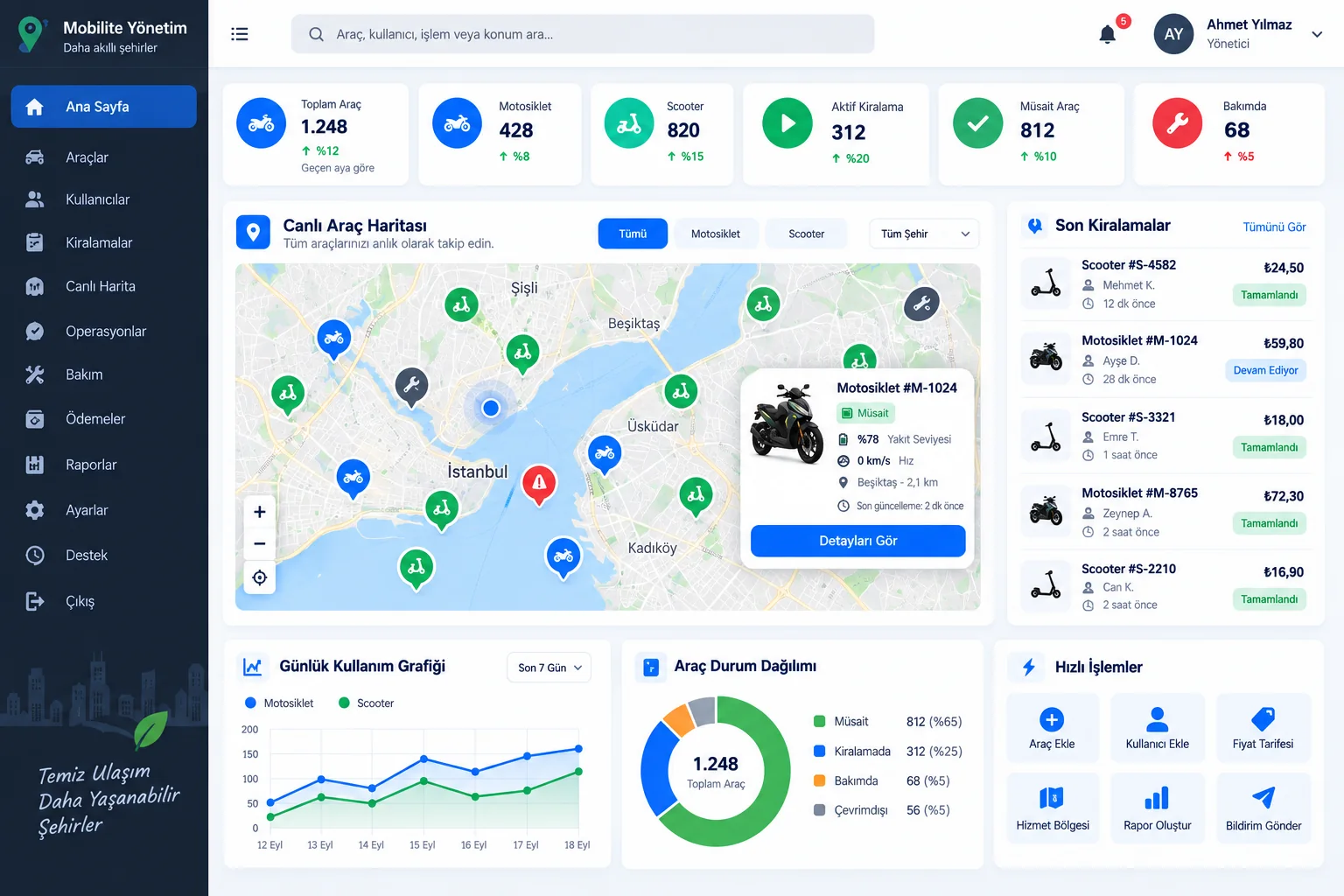
Screens are representative UI presentations. Final feature scope depends on project, vehicle and hardware compatibility.
During a rental, the mobile app, backend API, payment provider and IoT service each have separate responsibilities. Failure scenarios are designed with that separation in mind.
For example, a payment may succeed while the customer's connection drops, or an IoT device may respond late. Server-side transaction records allow the system to recover to the correct state.
Operational rules vary by project, so the final workflow is confirmed after the vehicle type and field procedures are understood.
Define the customer, payment, vehicle and operations steps before development begins.