⌁
01Customer Mobile App
Vehicle discovery on the map, vehicle details, QR rental flow, ride lifecycle, account and payment experience.
Explore details →
From the mobile app and GPS/IoT device to payment infrastructure and centralized fleet management, launch the technology you need under your own brand .
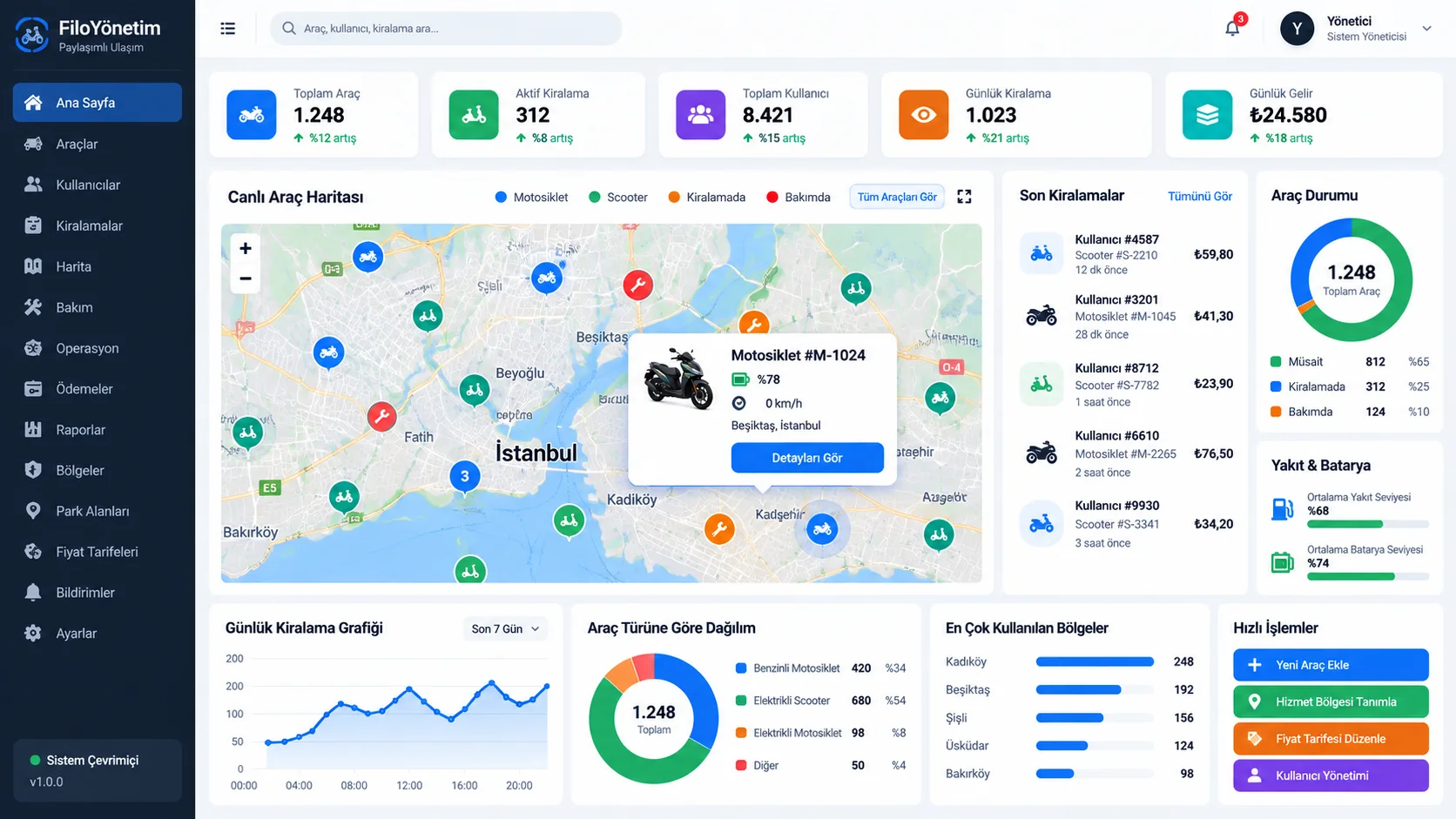
The centralized map helps you monitor vehicle locations, movement status and field distribution from one screen. The animated view below is a representative fleet simulation.
Run customer experience, field operations and fleet control from one centralized platform instead of stitching together disconnected systems.
Vehicle discovery on the map, vehicle details, QR rental flow, ride lifecycle, account and payment experience.
Explore details →Location, connectivity and vehicle-status data delivered to the platform, with remote-control scenarios on compatible hardware.
Explore details →Vehicles, users, rentals, service zones, pricing, maintenance and operations in one dashboard.
Explore details →Field-team workflows, vehicle deployment, maintenance tracking, activity logs and operational data.
Fleet management →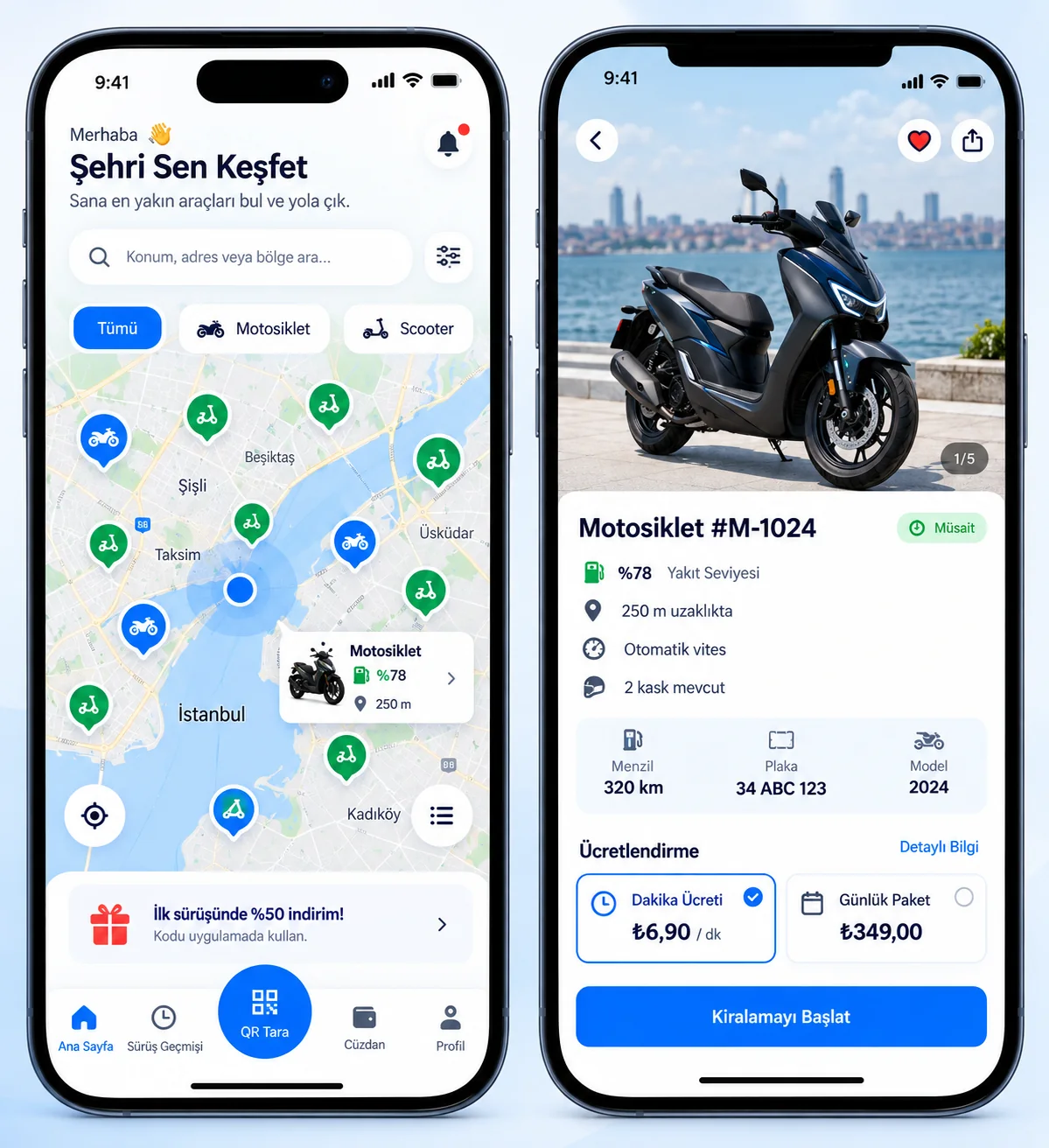
Your branded mobile app brings the essential rental steps together in a clear, intuitive experience.
Interface visuals are representative. Screens and features can be customized to the project scope.
A centralized view built to speed up daily operational decisions: live map, vehicle status, rentals, maintenance and reporting.
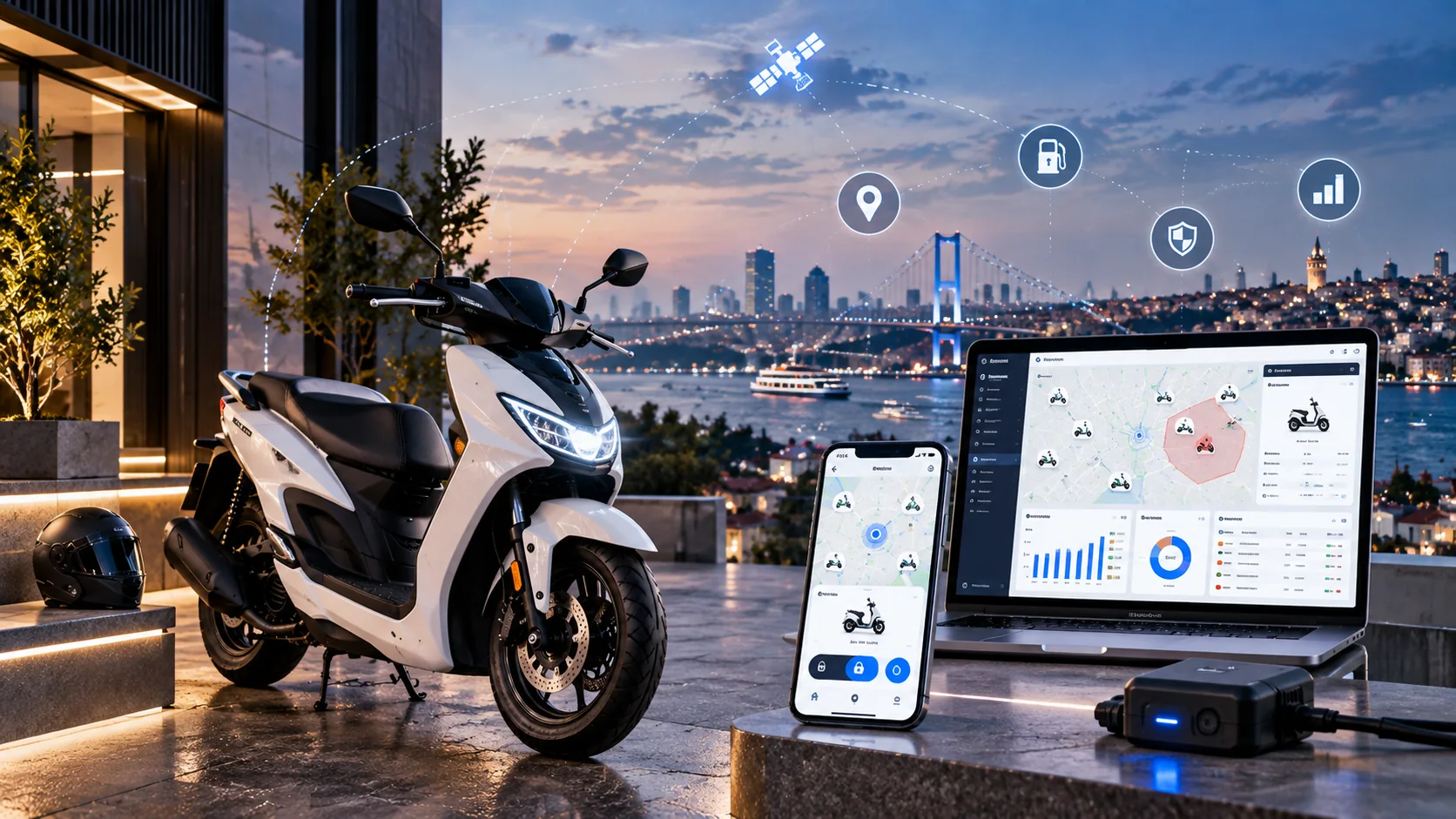
The GPS/IoT device creates a data bridge between the motorcycle and the management platform, allowing field status to be monitored centrally.
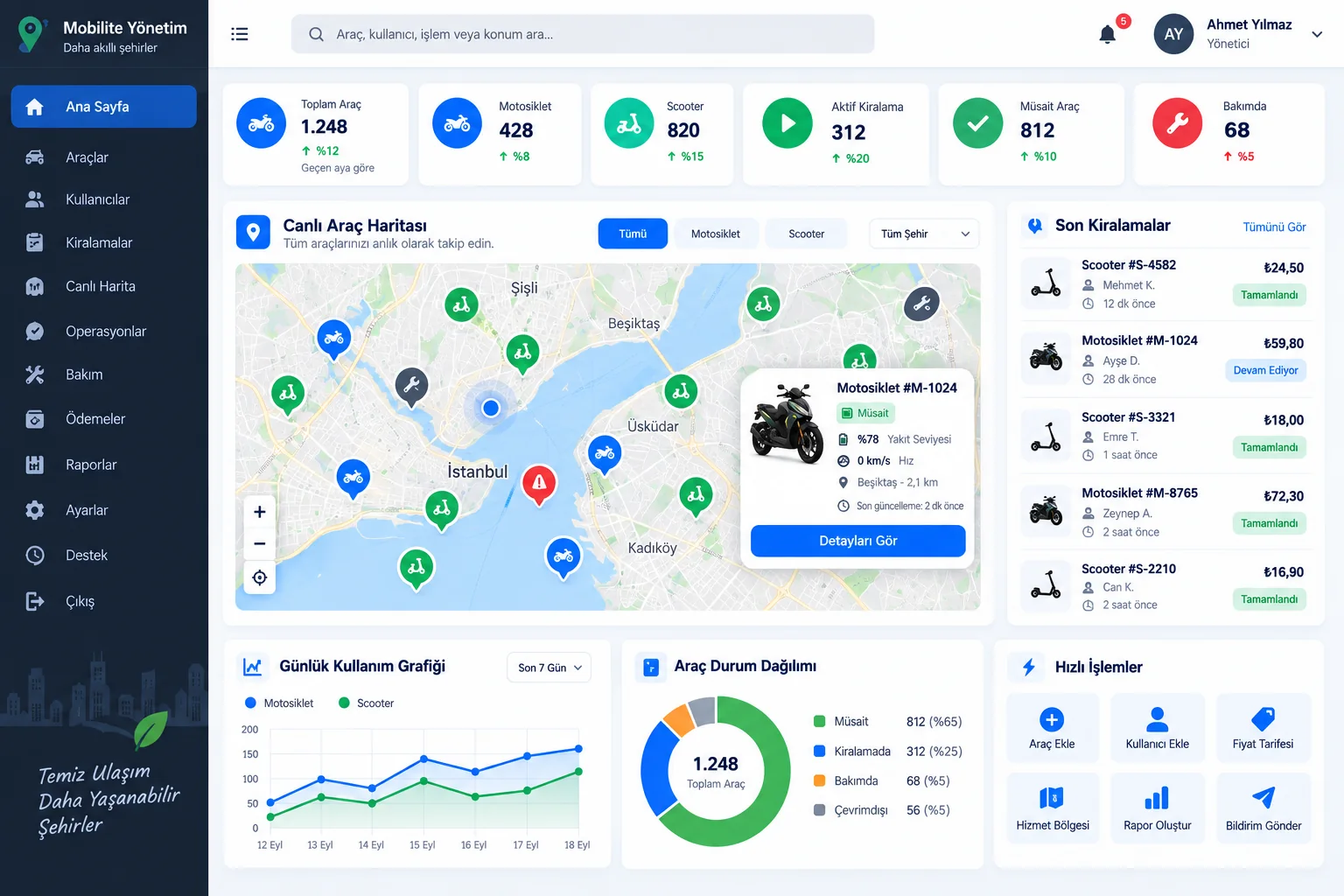
Vehicle deployment, status checks, maintenance needs and field-team activities can be managed in one operational structure.
We assess your city, vehicle type, fleet size, brand and business model.
The app and platform experience are configured around your brand.
Connectivity is designed around compatible hardware and motorcycle electronics.
Rental, location, payment and operational flows are tested before launch.
A shared gasoline motorcycle business requires vehicles, users, payments, location data and field operations to be managed together. eeDigi brings these components into a centralized technology platform that can operate under your own brand.
On the operator side, the web management panel supports fleet visibility, rental processes, users, pricing, maintenance and operations. On the customer side, the mobile app creates the digital journey from vehicle discovery to rental start and account management.
The GPS and IoT layer connects the physical motorcycle to cloud software. Depending on hardware and vehicle-electronics compatibility, location tracking, status data and supported remote-control scenarios can be included in the project.
Core daily management functions are handled within one platform architecture instead of disconnected tools.
Configure operating areas, parking rules and location-specific service scenarios.
Centrally manage unlock fees, per-minute pricing and project-specific package scenarios.
Separate vehicles that require service and make field and maintenance workflows visible.
Centralized records for operations users, activity history and management actions.
Answers to common questions about software, the mobile app, GPS/IoT, fleet operations and deployment.
The customer mobile app, web management panel, operations tools, GPS/IoT connectivity, rental flows, pricing, payment-ready architecture, service zones, maintenance workflows and reporting modules can be configured together based on project scope.
Yes. With a white-label approach, the app name, logo, color palette and customer-facing interfaces can be customized to your brand, so end users interact with your brand rather than eeDigi.
The solution can be configured for shared gasoline motorcycle and scooter models. Vehicle-side integration is planned according to the selected motorcycle model, electrical system and IoT hardware capabilities.
With compatible GPS/IoT hardware, vehicle location and connectivity status can be sent to the central management interface. Update frequency, accuracy and coverage depend on the device and communications infrastructure.
No. Remote-control scenarios require compatibility between the IoT device, relay connection and the motorcycle’s electrical/electronic architecture. A technical compatibility review is therefore performed before the project.
Depending on the project setup, the customer sees available vehicles on the map, opens vehicle details, starts the rental via QR or vehicle selection, and manages the ride from the mobile app.
Unlock fees, per-minute pricing and project-specific package scenarios can be defined centrally. The final pricing model is configured according to the operator’s commercial rules.
The payment flow can be included according to the selected payment provider’s technical requirements. Integration scope depends on the provider’s API, security and authentication methods.
Yes. Operating areas and supported geographic rules can be defined in the management structure. Parking and rental-end scenarios are configured around the business model.
Vehicle status can be monitored operationally, and vehicles requiring maintenance or field intervention can be separated in the management workflow, giving the operations team a clearer view of available fleet and service needs.
The platform is designed around centralized fleet management. Server capacity, communications load, operations users and data volume are planned according to the target fleet size.
First, the fleet, vehicle model and operating requirements are analyzed. Then software scope and IoT compatibility are clarified, followed by brand customization, integrations, testing and a go-live plan.
You can complete the project form on the contact page or contact the project team directly. We will review your target fleet, vehicle type, operating area and required modules.
Share your project, target fleet size and requirements. We will evaluate the right system architecture with you.